
What is Diastrophic Dysplasia?
- A form of dwarfism (skeletal dysplasia)
- Affects bone growth and development
- Caused by a mutation in the SLCA26A2 gene
- Thought to occur 1 in every 100,000
Diagnosis of Diastrophic Dysplasia
- Before birth by:
- Ultrasound scanning
- Testing methods e.g. Chronic villus sampling and DNA linkage studies.
- After birth by:
- Observation of common physical characteristics
- X-rays
What are the common characteristics?
- Shortened limbs
- Ear deformities (cauliflower ear)
- Hand deformities (hitchhiker thumb, fused finger joints)
- Feet deformities (ClubFeet – the severity differs)
- CleftPalate
- Progressive deformities and contractures of joints (differing severity)
- Progressive hip dysplasia (differing severity)
- Progressive curvature of the spine (differing severity)
- Degeneration of joints (differing severity)
*Please be aware, not all of the characteristics may be present*
Other information about Diastrophic Dysplasia
- Life expectancy is not affected
- Intelligence is not affected
- It is thought to be most common in Finland
- Can affect boys and girls equally
Genetics of Diastrophic Dysplasia
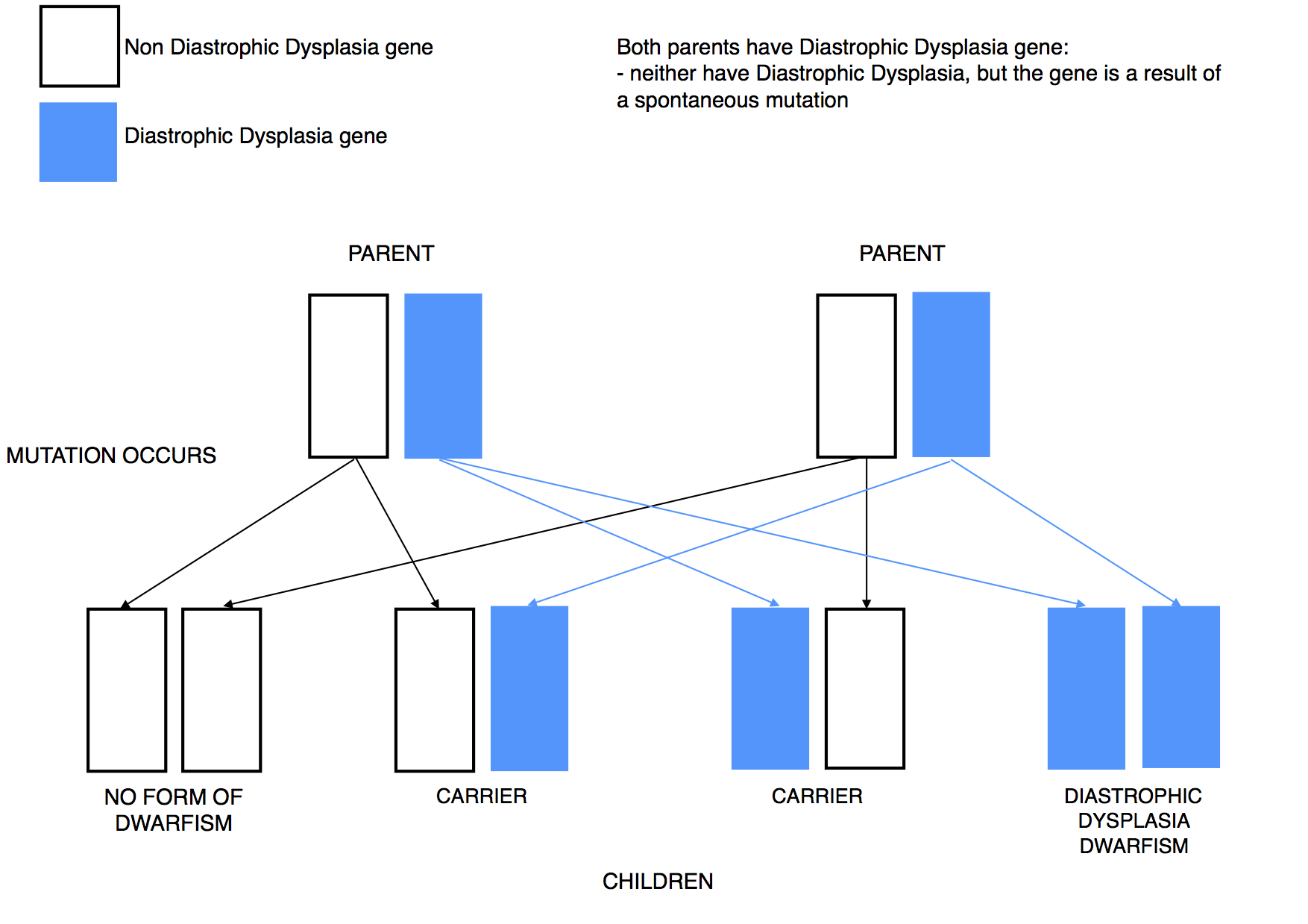
- Passed on by both parents (recessive)
Additional reading about Diastrophic Dysplasia
- Genetics Home Reference – Diastrophic Dysplasia
- National Organisation for Rare Disorders (NORD) – Diastrophic Dysplasia
- Diastrophic Dysplasia – information
- Diastrophic Dysplasia – research paper
- LPA Online – Diastrophic Dysplasia
- Kids Health
- Understanding Dwarfism
*Little People UK are not responsible for external website*